
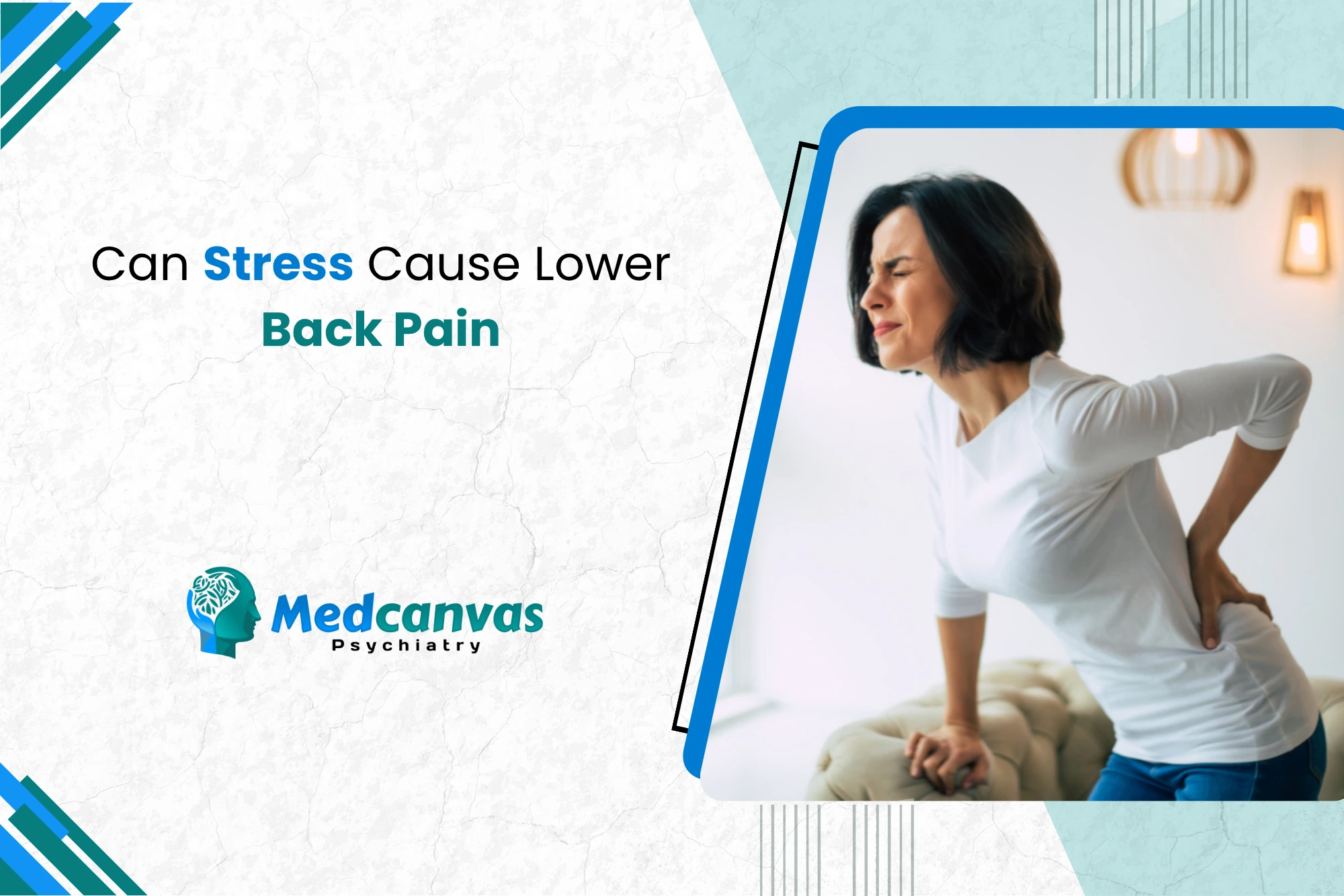
When people experience lower back pain, most people think it might be because of a physical cause.
What it really is: a broken spring, a mattress of years old, too many hours leaning over a screen
And sometimes that is exactly what it is.
But if your lower back has been hurting for a year, in which you’ve also dealt with a lot of stress, those two sets of concerns are almost certainly linked.
Stress is not only a mood spoiler.
Being fit does real, quantifiable stuff to your muscles, your nervous system, and how much pain you can deal with.
Yes, Stress Can Cause Back Pain
Can stress cause lower back pain? Lower back pain from stress. It does, and way more than most people think. So first of all, when your body perceives stress, it enters a physical state of alert.
Muscles tense, breath quickens, and your body gets ready to react to whatever it anticipates is oncoming.
The issue is that most people are like that all of the time. Work, money, relationships, life in general. The stress is incessant, so the muscles are never fully at ease. The lower back (lumbar spine), which goes from the sides of the spinal disc and absorbs much of that pressure, begins to complain.
Can stress cause back pain, not just tightness? Yes.
What Chronic Stress Does to Your Back
The stress and back pain link is not just about tight muscles. Sustained stress keeps cortisol elevated, and over time, elevated cortisol causes inflammation in the soft tissue around the spine.
It also lowers your overall threshold for pain, meaning your body registers discomfort more intensely than it would on a calm day.
So does stress make your back hurt? In more than one way. You have the muscle tension pulling on the lower spine.
You have inflammation in the surrounding tissue. And you have a nervous system that is amplifying all of it because it is running on high alert. One of those on its own would be manageable. All three together are why back pain stress tends to feel so stubborn.
How to Tell If Stress Is Behind It
Symptoms generally appear somewhat differently from pain due to an apparent physical pathology. Here are a few pointers that usually point to stress as the cause:
- It began or became much worse during a time of increased stress and got better when the stressor eased.
- Instead of the pain being localized to one area, it moves around more.
- There has been no structural reason found for it with scans and a physical exam.
- It is worse at the end of the week and improves after a break.
- You also have poor sleep, low energy, or you are on edge a lot of the time.
That last one matters. Back pain and stress are hardly ever present in isolation.
Now, if your back has been causing you pain, and in addition to that, you are possibly feeling weary or anxious, and or like the part of your body that helps you switch off is not working properly, there is a high chance you are piling too much responsibility on your nervous system.
The Loop That Keeps It Going
Stress and backache have a way of feeding each other. Chronic pain disrupts sleep. Disrupted sleep makes stress harder to manage. Harder-to-manage stress keeps the muscles tight. Tight muscles hurt. A lot of people spend months in that loop without realizing why the pain keeps coming back despite everything they try physically.
Stretching helps. Movement helps. Heat on the lower back helps. But if the thing driving the tension does not get addressed, the relief does not stick.
What Actually Makes a Difference
Moving Your Body
Gentle, consistent movement is one of the more effective things you can do for stress-related back pain. Walking, stretching, swimming. Nothing extreme. The goal is just to interrupt the muscle tension cycle and give the nervous system something physical to discharge into.
Treating the Mental Health Side
This is where a lot of people are missing something. Does stress cause backache that keeps returning even after physical treatment? That pattern usually means the root cause has not been touched.
When anxiety or depression is treated, cortisol comes down. Inflammation decreases. The nervous system stops running at full volume. Muscles that have been holding tension for months start to loosen on their own. The back pain stress cycle breaks from the inside rather than just being managed from the outside.
If you have been living with stress and back pain and the physical fixes are not holding, mental health support might be the part of the picture that has been missing.
If Your Body Has Been Telling You Something
Anxiety, depression, panic disorder, and chronic stress are matters we deal with at Medcanvas Psychiatry every day. If both back pain and stress have been in your life recently, that is worth working through with someone who treats the entire picture seriously.
Medcanvas Psychiatry provides mental health services for patients ages 6 to 70, North Dakota, Minot.
Both telepsychiatry and in-person appointments.
Phone: 701-963-6917 – 701-857-1333
Email: contact-us@medcanvaspsychiatry.com
Website: medcanvaspsychiatry.com
