
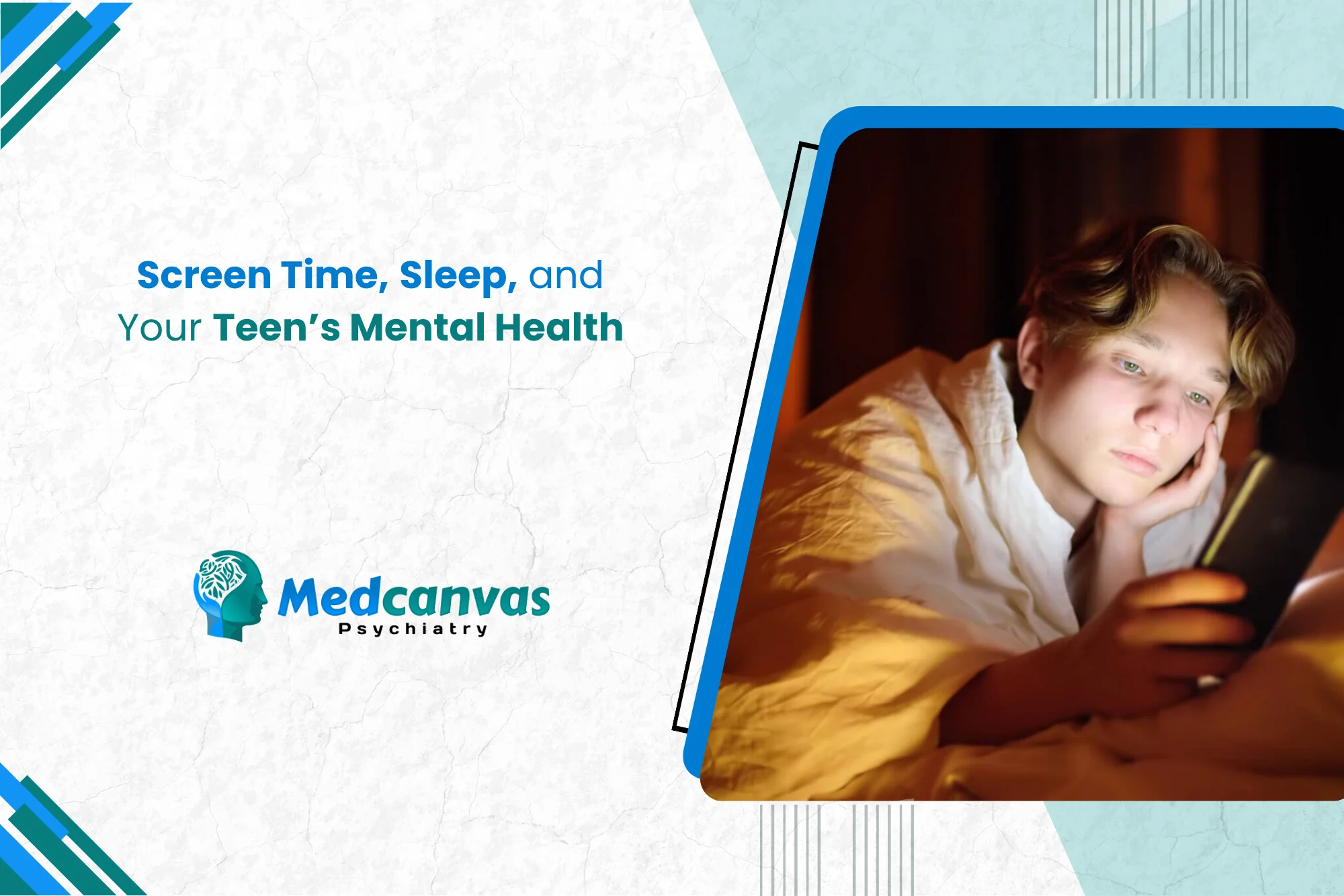
our teen’s light is still on late at night. You know they’ve got school in six hours. You’ve probably had the argument about the phone a hundred times already, and honestly, you’re not even sure anymore if the phone is really the problem or just an easy thing to blame.
Fair question. The research on this is messier than the headlines make it sound, and some of what gets repeated as settled fact isn’t quite that simple. Let’s actually walk through what’s known, what’s still debated, and what’s worth doing about it either way.
How Much Sleep Teens Actually Need
Start here, because this part isn’t controversial at all.
The American Academy of Sleep Medicine recommends that teens aged 13 to 18 get 8 to 10 hours of sleep per 24-hour period, on a regular basis. Not occasionally. Regularly.
Falling short of that isn’t a minor inconvenience. Insufficient sleep in teens is linked to:
- Attention, behavior, and learning problems
- A higher risk of accidents and injuries
- Hypertension, obesity, and diabetes
- Depression
- A higher risk of self-harm, suicidal thoughts, and suicide attempts
That last point is worth sitting with. Sleep isn’t just about feeling tired the next day. For teens specifically, it’s tied to some of the most serious mental health outcomes we track.
Where Screens Actually Fit Into the Sleep Problem
Here’s where it gets interesting, because the connection between screens and sleep is more specific than “screens are bad.”
One notable finding: teens logging more than four hours of screen time a day fell asleep about 30 minutes later, on average, than teens logging under an hour. More screen time also tracked with more symptoms of sleep deprivation overall.
But here’s the part that actually matters for what you do about it. Researchers in the Netherlands ran a small trial with 25 frequent device users, splitting them into two groups:
- One wore blue-light-blocking glasses in the evening
- One simply stopped using screens in the evening
After just one week, both groups fell asleep about 20 minutes earlier and reported fewer sleep deprivation symptoms. Lead researcher Dr. Dirk Jan Stenvers put it plainly: these sleep complaints “can be easily reversed by minimising evening screen use or exposure to blue light.”
That’s genuinely good news. It means this particular problem isn’t permanent, and it doesn’t require a total technology overhaul. It responds to fairly small, specific changes, fast.
Wait, Does Screen Time Actually Cause Mental Health Problems?
This is where you need to slow down, because the popular narrative oversimplifies things a bit.
A large study out of Oxford, analyzing data from more than 17,000 children and teens across Ireland, the UK, and the US, found no meaningful link between screen use and young people’s wellbeing — whether that screen time happened during the day or right before bed. The researchers specifically said they hoped the findings would push back against alarming media coverage that’s outpaced what the evidence actually shows.
So which is it? Here’s the honest answer: it depends on what you’re measuring.
- Screen time and sleep timing has fairly direct, replicated evidence behind it. More evening screen use, later sleep onset. That part holds up.
- Screen time and overall wellbeing is a lot murkier. Broad, blanket claims that “screens cause depression” aren’t well supported by the stronger studies.
- What teens are actually doing on screens seems to matter more than how long they’re on them. Research specifically looking at social media use (as opposed to gaming or other screen activities) has found a connection to depressive symptoms that gaming alone didn’t show.
In other words, “screen time” as one single category is probably too blunt a tool. An hour of texting a friend, an hour doom-scrolling a comparison-heavy feed, and an hour watching a show before bed are not the same experience for a teenage brain, even though they’d all get lumped into the same “screen time” number on a tracking app.
The Bigger Picture: Teen Mental Health Right Now
It’s worth knowing the broader context, because this isn’t a hypothetical concern.
CDC data from 2023 found that 40% of high school students reported persistent sadness or hopelessness – down slightly from 42% in 2021, but still way up from 30% in 2013. Twenty percent seriously considered suicide. Nine percent attempted it.
The numbers aren’t evenly spread, either:
- Female students reported sadness or hopelessness at 53%, compared to 28% of male students
- Female students seriously considering suicide sat at 27%, versus 14% of male students
- LGBTQ+ students reported sadness or hopelessness at 65%, compared to 31% of their cisgender, heterosexual peers, and were far more likely to report a suicide attempt in the past year (20% versus 6%)
Screens aren’t the whole story behind these numbers, and no single factor is. But sleep genuinely is part of that picture, which is exactly why it’s worth focusing energy there rather than getting stuck in a screen-time shouting match that the research doesn’t fully back up anyway.
What Actually Helps, Practically Speaking
Given everything above, here’s where the evidence points, rather than where blanket “no screens, ever” rules tend to land:
- Protect the hour before bed, specifically. This is where the strongest evidence lives. A screen-free wind-down window, even just 30 to 60 minutes, is a small ask with real payoff.
- Don’t fight about total screen time alone. The research doesn’t strongly support that being the core issue. Fighting over a number that isn’t the real driver just burns trust without fixing the actual problem.
- Pay more attention to what, not just how long. A teen scrolling a comparison-heavy feed for an hour is in a different spot than a teen video-calling a friend for an hour. Worth noticing the difference instead of treating all screen time as interchangeable.
- Keep the phone out of the bedroom overnight, if you can get buy-in. Not as a punishment, but because it removes the temptation entirely rather than relying on willpower at midnight.
- Watch for sleep problems as an early flag, not just a mood problem. Persistent trouble falling or staying asleep is itself a nationally recognized signal worth raising with a pediatrician or mental health provider, not just something to wait out.
- Keep communication open, not just rules. A lot of what protects teen mental health isn’t a screen-time limit at all. It’s whether they feel like they can actually talk to you about what’s going on, including the hard stuff.
When It’s Time to Bring in Professional Support
A few bad nights of sleep or one rough week isn’t typically cause for alarm. But it’s worth reaching out to a professional if you’re noticing:
- Sleep problems that persist for weeks, not just occasional late nights
- A noticeable drop in mood, energy, or interest in things they used to enjoy
- Withdrawal from friends, family, or activities they used to care about
- Any mention of hopelessness, self-harm, or suicidal thoughts — this one always warrants immediate attention, not a wait-and-see approach
- Grades or daily functioning slipping in a way that feels out of character
If your teen is in crisis right now, the 988 Suicide & Crisis Lifeline is available 24/7 by call or text.
Not Sure Where to Start?
Sleep, screens, and mental health are tangled together in ways that don’t always match the headlines, and figuring out what’s actually driving your teen’s struggles usually takes more than a household rule change. If you’re noticing warning signs or just want a clearer picture of what’s going on, the team at MedCanvas Psychiatry can help you sort through what’s actually happening and build a plan that fits your teen, not a generic screen-time rule.
This article is for general education and isn’t a substitute for a professional evaluation. If your teen is showing signs of a mental health crisis, please seek immediate professional help.
