
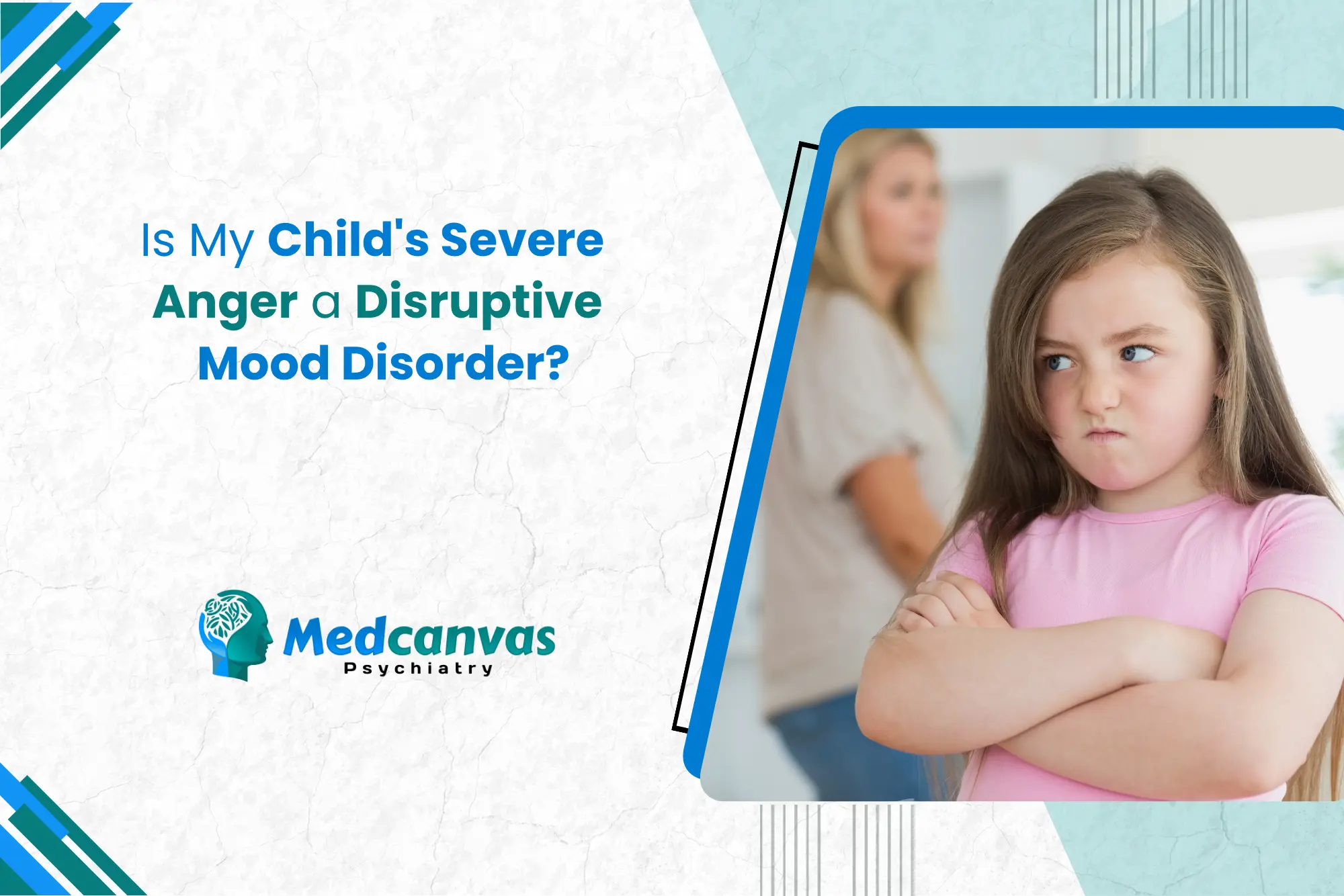
Tantrums happen. Every kid has one. But you are not here about a tantrum. You are here because it has been happening for months, it gets ugly fast, and you have started flinching a little before you even ask your kid to put their shoes on.
A diagnosis called DMDD (disruptive mood dysregulation disorder) comes up a lot in this situation. It is a real diagnosis. It is not a way of saying your kid is difficult. There is a real gap between a hard season and a kid whose anger has become the default setting in the house.
What DMDD Is
Quick answer to what is DMDD in mental health circles: it got added to the DSM-5 in 2013. Before that, a lot of kids with constant irritability and explosive anger were getting labeled with pediatric bipolar disorder. NIMH-backed research found that kind of chronic childhood irritability usually does not turn into adult bipolar disorder later. It more often turns into depression or anxiety. DMDD got created so these kids would get diagnosed with something that actually matched what was happening, instead of getting put on a bipolar track that did not fit.
Two pieces make up the diagnosis. The mood underneath is irritable most of the day, almost every day, outburst or not. And the outbursts themselves are bigger than whatever set them off, by a lot.
What It Looks Like
DMDD symptoms in child cases follow a fairly specific list, which is part of why a guess from a parenting article is not enough. The DSM-5 criteria include:
- Verbal or physical outbursts way bigger than the trigger or the child’s age would explain
- Outbursts about three or more times a week
- Irritable, angry, or grumpy mood between outbursts, the kind of mood teachers or grandparents notice too
- Shows up in two or more settings, not just at home
- Starts before age 10, diagnosed between ages 6 and 18
That age cutoff matters. DMDD is a childhood diagnosis. Severe irritability presenting for the first time at 15 points in another place.
Is It ODD or DMDD?
This mix-up happens constantly. Oppositional defiant disorder and DMDD look similar on the surface, lots of conflict either way. The actual difference between ODD and DMDD is what is driving it.
ODD
Defiance is the core of it. Arguing, refusing, doing the opposite on purpose. It is about control more than mood.
DMDD
Mood is the core. The irritability is there with or without a rule being enforced. The outburst is a kid who cannot handle the frustration in that exact moment, not a kid choosing to push back.
They can overlap too, which is why ODD vs disruptive mood dysregulation disorder needs an actual clinician, not a Google search at 11pm. Getting it right changes the whole treatment plan.
Where DMDD Sits Among Other Diagnoses
DMDD is one of several mood disorders in children, along with childhood depression, anxiety, and pediatric bipolar disorder. These overlap enough that misdiagnosis used to be common before DMDD existed as its own category. A full evaluation looks at the whole picture, history, timing, more than one setting, instead of judging off one bad afternoon.
Treatment
Treatment for temper dysregulation disorder usually starts with therapy, with medication added only if needed.
- Cognitive behavioral therapy, building frustration tolerance and coping skills
- Parent management training, changing how you respond to outbursts to reduce escalation
- DBT skills adapted for kids, especially naming and managing big emotions
On DMDD medications: nothing is built specifically for DMDD. Providers treat the symptoms underneath it instead, stimulants if ADHD is also present, SSRIs if mood and irritability lead, antipsychotics in more severe cases. That call belongs to a psychiatric provider after a real evaluation. Not a guess.
When This Is Worth a Real Evaluation
A couple rough weeks during a hard school stretch is not DMDD. Multiple outbursts a week, an irritable baseline that never really lifts, friction at home and school both, that combination is what makes it worth looking at properly.
A real evaluation is more than one appointment. It pulls in your history, teacher input if possible, and an honest look at how long this has actually been going on.
Get a Real Answer
At Medcanvas Psychiatry, kids and teens get the same level of evaluation as adults do, full history, accurate diagnosis, a plan built for your specific child instead of a checklist. We see patients aged 6 to 70, with in-person and telepsychiatry appointments across Minot, North Dakota.
If your kid’s anger has been running the house, you do not have to keep guessing at what it is.
Phone: 701-963-6917 | 701-857-1333
contact-us@medcanvaspsychiatry.com
Website: medcanvaspsychiatry.com
At Medcanvas Psychiatry, we treat the whole person. At every age.
